

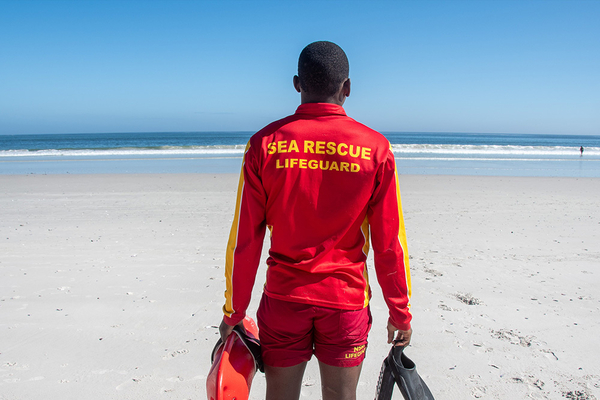
Easter weekend marked the close of the 2025/2026 NSRI lifeguarding season, wrapping up sustained effort from lifeguards across South Africa’s coastline. Looking back, Lifeguarding Operations Manager Rebecca Carter-Smith describes it as “one of our most demanding, but also one of our most rewarding” seasons yet.
A defining highlight, she adds, was the unprecedented demand for NSRI lifeguarding services. “We experienced a significant number of last-minute contract negotiations and late service requests, to the point where, for the first time, we actually had to turn down requests because our team was operating at full capacity.”
That pressure is, in many ways, a testament to the trust municipalities and communities place in NSRI lifeguards to keep busy beaches and dams safe.
Behind the scenes, there were important structural gains too. A key shift was better integration between the NSRI’s Volunteer Support Centre’s training and operations teams and the lifeguarding teams on the ground. The addition of four new training assistants “made a significant difference to how we managed the season,” Rebecca notes, helping with logistics, planning, and direct support to lifeguards working under tight timelines.
Lifeguards By the Numbers and the Unseen Work
Across 8 municipalities and 48 lifeguard sites, 268 NSRI lifeguards provided a consistent safety presence on beaches and at pools over a combined 367 operational days.
Over the course of the season, they:
Welcomed 459 002 beach visitors
Watched over 145 143 swimmers
Carried out 28 465 preventative actions
Performed 329 rescues
Treated 1 637 first aid cases
These figures reflect the volume of work, but they do not tell the full story of the everyday moments where lifeguards make the biggest difference.
“While there isn’t a single rescue that defines the season, what stands out most is the volume and consistency of incidents managed across multiple beaches, often simultaneously,” Rebecca explains.
Many of these involved rip currents and swimmers drifting outside designated swimming zones, requiring rapid, coordinated responses and, at times, support from NSRI rescue stations and local emergency services.
For Rebecca, the most powerful work is often invisible to the public: “The standout moments are not just the rescues themselves, but the early interventions that prevented situations from becoming rescues. The ability of lifeguards to identify risk, move swimmers, and manage the public before incidents develop is where the real value of the service lies. These moments, often unseen, are what ultimately reduce the number of serious incidents and save lives.”
Turning Challenge into Improvement
The season also presented real operational challenges. In some regions, a shortage of suitably qualified lifeguards meant recruiting from outside the municipality while launching local training programmes, adding complexity but ensuring that beaches remained covered.
Equipment and uniform supply delays sometimes saw essential gear arriving just a day before operations began. This required extra trips, fast distribution, and agile coordination to get the beaches fully operational in time.
At the same time, NSRI implemented a major upgrade of its reporting tools. The former Surf Rescue App evolved into the Lifeguard Portal, a more robust, user-friendly system designed for real-time operational reporting.
“We are now capturing data more accurately and comprehensively than in previous seasons,” Rebecca says, thanks to improved usability and better integration.
The Lifeguard Portal allows lifeguards to log statistics, incidents, and preventative actions in the field, giving supervisors a clearer view of what is happening across multiple regions. Over time, the portal has become a central part of lifeguard operations, helping NSRI to better understand and communicate the impact of its services.
The Final Push Before Winter
While not as intense as the December peak, Easter brings an influx of holidaymakers wanting to make the most of the last warm days. This creates a busy, condensed period for lifeguards and surrounding services such as traffic management and emergency response.
Seasonal shifts in weather and ocean conditions during this time often result in more frequent beach closures. Managing and communicating them clearly to the public is vital to keeping visitors safe.
Rebecca says she is most proud of how lifeguards and supervisors rose to these demands: “The professionalism and willingness of the entire team to step up, adapt, and deliver is what stands out the most.”
A Message to Supporters
None of this would be possible without our loyal supporters.
Your backing helps put trained lifeguards on beaches, equips them with the tools they need, and supports the systems that keep operations running smoothly.
As the NSRI continues to refine training, strengthen partnerships, and develop tools like the Lifeguard Portal, your support ensures that next season’s flags can go up with even greater readiness and that more families can return home safely after a day at the beach.
How An Act of Care Inspired Commitment to Drowning Prevention in McGregor
Read More
Western Cape Premier Alan Winde today visited the National Sea Rescue Institute (NSRI) Volunteer Support Centre (VSC) in Cape Town to thank volunteer crews and staff from across the province who were activated during the recent floods. ...

Send us your favourite photograph of NSRI people doing what we do, and you could win an NSRI shop voucher worth R250! ...

The NSRI has secured a significant three-year partnership with the Victor Daitz Foundation and World Relief Australia to fund a dedicated Drowning Prevention Instructor in Richards Bay, KwaZulu-Natal. ...