

When the NSRI began training lifeguards along the Wild Coast in 2020, the objective was to strengthen water safety capacity in coastal communities where resources are often limited. Five years later, the impact of that work can be seen not only in improved rescue capability, but in the opportunities that have emerged for the people involved.
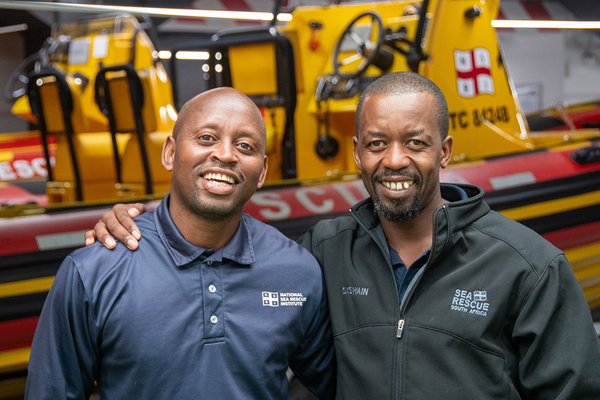
For 42-year-old Fezile Bodla (pictured left, alongside NSRI training officer Simphiwe Rorwana), from Coffee Bay, the training opened pathways he had never imagined.
His journey reflects the value of investing in skills development within communities rich in commitment but often underserved by opportunity.
Building skills where they are needed most
Before the NSRI arrived, lifeguarding in Coffee Bay was largely seasonal and often undertaken without access to specialised equipment or structured professional training. While many were dedicated to keeping others safe, the idea of building a long-term career in lifesaving felt distant.
“I only knew the ocean as a place to find work, like fishing or diving. Lifeguarding was not something big in Coffee Bay,” Fezile explains. “But now I see many different opportunities since I joined the NSRI.”
Through structured training, mentorship and access to professional rescue equipment, local lifeguards have been able to expand both their technical capabilities and their understanding of what a career in lifesaving could look like.
For Fezile, the experience created a shift in perspective. “The NSRI don’t only train you as a lifeguard. They show you many opportunities to learn more, gain qualifications and grow,” he says.
Recognising Leadership Potential
Simphiwe Rorwana, known as Sam, an NSRI training officer, first met Fezile when the organisation began working along the Wild Coast.
“I met him in 2020 when we started training up lifeguards to strengthen rescue services in the area,” he explains.
From the outset, Fezile showed a willingness to learn and an ability to support those around him.
“What stood out about Fezi is his leadership qualities within the team,” Sam says. “He was able to explain what we were coming to do to the rest of the team and keep them together.”
Although he already had experience as a lifeguard, Fezile embraced new techniques and professional standards introduced through the programme.
“He always welcomed the NSRI’s way of doing things, and the equipment that we worked with,” Sam says.
Over time, that openness to learning enabled him to grow into an assistant instructor, helping train others in his community and continuing to build his own experience along the way.
A Milestone That Reaches Beyond One Individual
Five and a half years later, Fezile’s dedication and steady progress have led to an opportunity that reflects just how far he has come: a position as a lifeguard aboard a Royal Caribbean cruise ship.
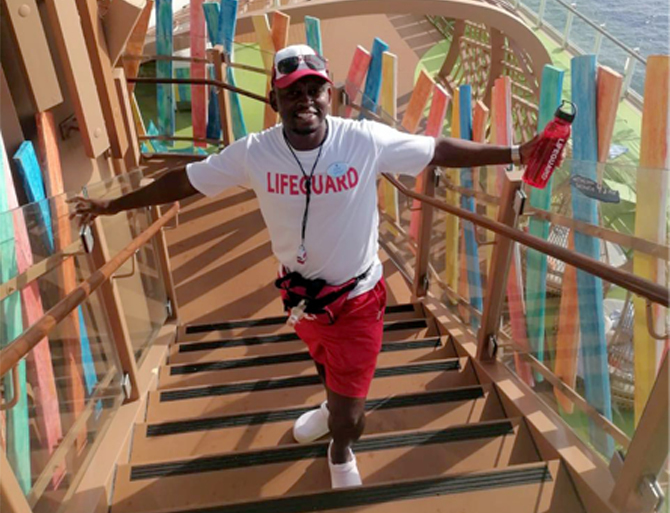
Fezile is the second NSRI-trained lifeguard to secure a position on an international cruise liner, following Gareth Seroot’s journey from Ceres to working as a lifeguard aboard an MSC cruise ship. His achievement provides further evidence that sustained training and mentorship can open doors that once felt out of reach.
“I've never been on a flight, I've never been on a ship, and I've never been out of South Africa,” Fezile says. “So I have mixed feelings about it. I'm happy, but at the same time, I'm nervous.”
For Sam, the moment carries particular significance because of what it represents for the wider community.
“For somebody from Coffee Bay, or from the Wild Coast, to become a cruise ship lifeguard is massive,” he says. “In his community, employment is only available between December and January for lifeguarding. So, to be able to go overseas and do it, it's amazing.”
The achievement demonstrates what can happen when local talent is supported with sustained training and encouragement.
Creating Futures Through Lifesaving
While the Wild Coast training initiative was designed to improve water safety capacity, its impact has extended beyond the shoreline. For many participants, it has expanded what they believe is possible for themselves and their communities.
“It's saving lives, changing lives, and creating futures,” Sam says.
And Fezile is conscious of the example his journey may set.
“For my village, I'm quite sure that it's going to open their minds,” he says. And, he hopes to bring back the experience and knowledge he gains abroad to continue strengthening lifesaving capacity at home.
A shared sense of achievement
For Sam, seeing this progress unfold over time has been deeply meaningful.
“It still feels unreal. We've done almost everything that we said we would do five years ago,” he says. “It's a dream come true.”
As the NSRI continues its work, stories like Fezile’s highlight how investing in skills development can strengthen rescue capability while also opening pathways to long-term opportunity.
It is a reminder that when individuals are equipped with the tools, training and encouragement to succeed, the impact extends far beyond the immediate act of saving lives.
A New Era for Sea Rescue at Mykonos
Read More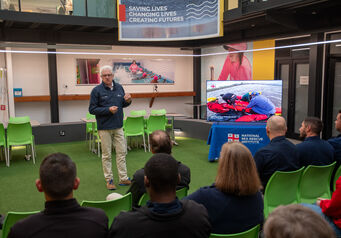
Western Cape Premier Alan Winde today visited the National Sea Rescue Institute (NSRI) Volunteer Support Centre (VSC) in Cape Town to thank volunteer crews and staff from across the province who were activated during the recent floods. ...
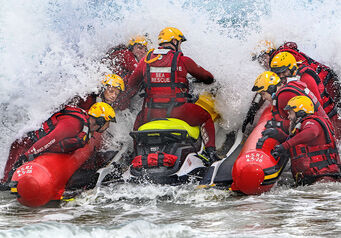
Send us your favourite photograph of NSRI people doing what we do, and you could win an NSRI shop voucher worth R250! ...
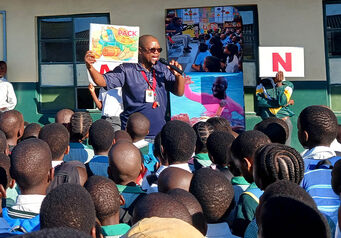
The NSRI has secured a significant three-year partnership with the Victor Daitz Foundation and World Relief Australia to fund a dedicated Drowning Prevention Instructor in Richards Bay, KwaZulu-Natal. ...