

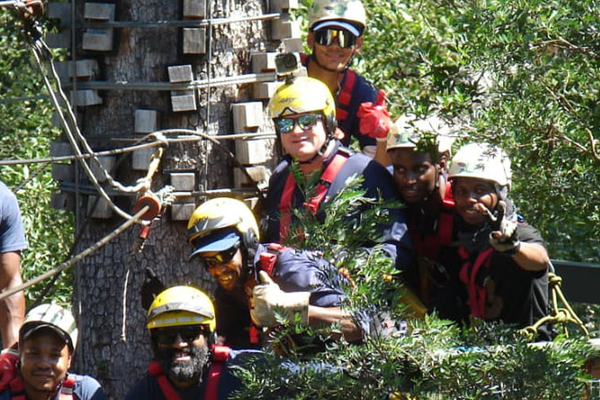
The NSRI’s Volunteer Support Centre (VSC) training team, last month, joined forces with Station 46 in Storms River for a maritime extrication refresher session, set high above the forest floor on the platforms of Tsitsikamma Canopy Tours.
While maritime extrication training is typically associated with vessels at sea, this session took a different approach. By training in a land-based environment that mirrors the region’s rugged terrain, volunteers built skills that directly translate into real rescue scenarios.
What Maritime Extrication Really Means
Leading the session was NSRI Regional Operations Manager and Class 1 Coxswain, Dean Wegerle, who helped volunteers understand the complexity of this specialised discipline.
“Maritime extrication is high-angle rope work that we have developed to work in the maritime industry,” Dean explains. “It is to do with two moving objects.”
In other words, this is not controlled, predictable rescue work. It is technical, demanding and constantly changing. It also requires calm thinking and absolute trust in both equipment and training.
Safety First, Always
Although this was a refresher session rather than a full course, the focus remained firmly on reinforcing the fundamentals, starting with safety.
The morning was spent in the classroom, where volunteers worked through gear familiarisation, learning how to inspect, wear and rig equipment correctly before moving into practical exercises high above the gorge.
“Safety is always our number one priority,” Dean says.
It’s this commitment to preparation that ensures NSRI volunteers can step into unpredictable, high-risk situations with confidence and control.
Training for the Reality of Storms River
For Station 46 Station Commander Charles Hutchins, training in environments that reflect the realities of Storms River is essential to saving lives.
“We, as a rescue organisation, living in a remote part of the Eastern Cape, need to adapt to circumstances,” he says. “Our environment is unique and harsh to say the least. From rocky shores to flooding rivers in the mountains, high cliffs and thick fynbos-covered mountains.”
The area is known for its wide range of adventure activities – from ziplining through indigenous forest canopies to kayaking, tubing and multi-day hikes like the Otter Trail. Each presents its own risks, requiring rescuers to be adaptable and prepared.
“We are fortunate to get world-class training, be it on the sea, land or rivers. The maritime extraction and swift water rescue training is definitely a valuable resource to us,” Charles adds.
Community in Action
The day was also a powerful example of what can be achieved through community collaboration.
Tsitsikamma Canopy Tours opened its platforms to the NSRI, creating a safe yet challenging environment for training. In return, their guides were included in the session, gaining valuable skills that could make a difference in an emergency.
“It’s important that we maintain a good relationship with the various role players in our area, building trust and respect for one another,” Charles says.
In a small, close-knit community like Storms River, these relationships are vital. When something goes wrong, it is often the collective effort of trained responders and local partners that leads to a successful rescue.
The venue also created a dynamic training environment that challenged volunteers to think critically.
“Using the Tsitsikamma Canopies gave us a nice, safe platform to work from, but also very different for the guys to think outside the box,” Dean explains.
With constantly changing anchor points, angles and setups, volunteers were required to assess each situation and adapt their approach, mirroring the unpredictability of real rescue operations.
From Fear to Confidence
Perhaps the most powerful moments of the day weren’t technical; they were personal.
“Well, the highlights of the training were seeing the growth of certain crew members,” Charles says. “From being wary of the heights and wondering why they signed up for this, to guys totally confident in the training received.”
That transformation is at the heart of what the NSRI does.
Thanks to the ongoing support of donors and partners, volunteers are not only trained, but they are also ready.
Petro Meyer Retires After Teaching Generations Survival Swimming
Read More
Western Cape Premier Alan Winde today visited the National Sea Rescue Institute (NSRI) Volunteer Support Centre (VSC) in Cape Town to thank volunteer crews and staff from across the province who were activated during the recent floods. ...
Send us your favourite photograph of NSRI people doing what we do, and you could win an NSRI shop voucher worth R250! ...
The NSRI has secured a significant three-year partnership with the Victor Daitz Foundation and World Relief Australia to fund a dedicated Drowning Prevention Instructor in Richards Bay, KwaZulu-Natal. ...