

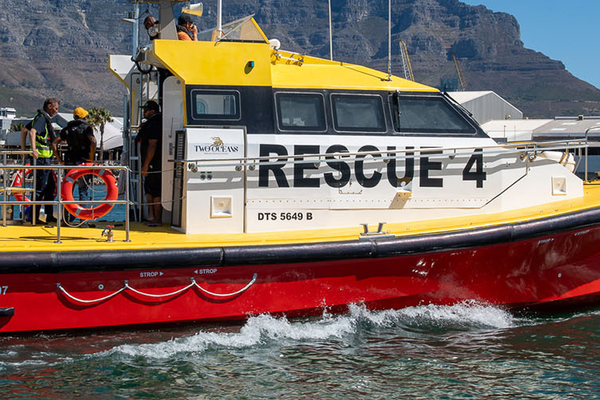
Earlier this month, the NSRI’s new Mykonos rescue vessel, Rescue 4, went into the water for the first time, marking a major milestone for the station and for the organisation’s Class 1 replacement programme. It is the second-last of the new Offshore Rescue Craft (ORC) fleet to be launched, with the final vessel destined for Hout Bay.
“Launching any new boat is nerve-racking,” Head of Fleet and Facilities, Graeme Harding, says. “However, with the expert staff from Two Oceans and Teemane Cranes, it went smoothly.”
He adds that the outside temperature was about 36°C, which allowed the air conditioning to be thoroughly tested and all systems to be checked, making it an overall successful day. Graeme also notes that the vessel will now undergo the required SAMSA certification and sea trials before being formally handed over for delivery to the station, hopefully in the first week of April.
Valued at around R26 million, Rescue 4 represents a significant investment in capability, safety and endurance. But the story does not stop at the boat itself. The new rescue base at Club Mykonos in Langebaan, built at a similar cost, has been designed specifically to support this next-generation craft and the demanding environment in which it operates.
Built For Tougher Rescues
Some of the most demanding types of call-outs on the West Coast involves medical evacuations from large ships and searching for lost fishing boats in the thick West Coast fog. Graeme explains: “With the outside helming position on the ORC, it is far easier for the helmsman to manoeuvre the boat up alongside a massive ship in often hairy sea conditions.” The vessel’s advanced equipment, shock-mitigating seats, and all-around safety rail provide crucial protection, allowing crews to tackle longer, more challenging rescues with confidence.
“The ORCs have brought sea rescue into the modern era, regarding Class 1 boats, and we can proudly stand alongside any of the international volunteer organisations when it comes to the quality of our Class 1 fleet,” Graeme adds. Their longer range and onboard radio direction finder, which homes in on VHF radio signals, will also make it easier to locate vessels in fog or poor visibility, increasing the chances that people will make it home safely.
A Base Built for the Future
The arrival of ORC 7 has been paired with a complete rebuild of the Mykonos rescue base. Project Manager Willem de Waal explains why replacement was necessary: “Most of our rescue bases evolve over time, and they tend to become a rabbit warren of little nooks and crannies and impracticalities.”
With space at a premium and operational demands increasing, the new Mykonos base was designed to accommodate both the vessel and its crew. “The old building was becoming too small, with really cramped spaces; now we have a much more spacious control room, bigger ablutions, bigger space for the crew in their training room, and obviously bigger space for their vehicle and smaller assets,” Willem says. Located on the harbour wall and being exposed to wind and sea spray, the building’s seaward side has extra waterproofing and only a few windows. The whole structure is also higher above sea level to prevent storm surges and exceptionally high tides from washing into the boathouse.
Moreover, launching and recovering Rescue 4 will be safer and more efficient thanks to a completely rebuilt slipway with a steel rail-and-cradle system. “Bad weather should not affect launches at all,” Willem notes. “The fact that both the vessels are on rails makes it a lot safer for the crew, and easier to launch in adverse weather conditions.”
These careful design choices ensure the base not only meets current needs but will serve Mykonos’ sea rescue operations for decades to come.
An Investment in Lives
The new Rescue 4 and Mykonos base represent far more than a modern boat and building. Every aspect of the investment is focused on operational capability, crew safety and comfort, and long-term durability. “The money is spent on the building because of the boat,” Willem says. “The ORCs are significantly larger and more capable than the old vessels, and the bases have to be designed to accommodate them safely and efficiently.”
He adds, “These assets are built to last. The boat has to last for at least 40 years, and therefore the building needs to last for another 40 years.” This forward-looking approach ensures Mykonos can continue to respond effectively to emergencies for decades, without requiring costly modifications or replacements in the future.
Photo of the month: February 2026
Read More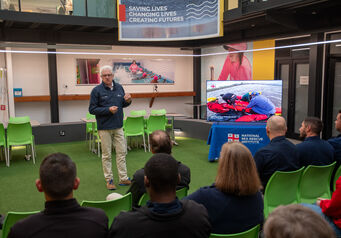
Western Cape Premier Alan Winde today visited the National Sea Rescue Institute (NSRI) Volunteer Support Centre (VSC) in Cape Town to thank volunteer crews and staff from across the province who were activated during the recent floods. ...
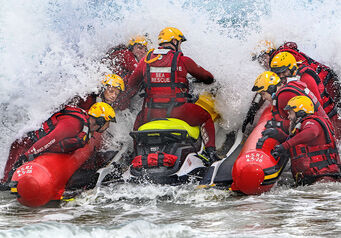
Send us your favourite photograph of NSRI people doing what we do, and you could win an NSRI shop voucher worth R250! ...
The NSRI has secured a significant three-year partnership with the Victor Daitz Foundation and World Relief Australia to fund a dedicated Drowning Prevention Instructor in Richards Bay, KwaZulu-Natal. ...