


Every summer, thousands of South Africans head to the coast to enjoy the sea. Yet few realise that one of the ocean’s most dangerous forces can form right where they want to swim.
Rip currents are powerful channels of water that flow away from the beach, and they are responsible for many drownings along our coastline.
NSRI spokesperson Andrew Ingram offers a clear explanation: “It’s easiest to think of a rip current as a river of water that flows away from the beach out to the backline. It forms because, as waves come in, the water has to find a way back out to sea.”
The shape and structure of the seabed often directs this outward flow, creating a narrow, fast-moving stream that can sweep swimmers out in seconds.
Why Rip Currents Are So Dangerous
Rip currents often go unnoticed because they can appear calm and inviting. “Ironically, a rip often looks like the calmest spot on the beach,” Andrew explains. “If you see a gap where there are no breaking waves and the water looks darker, that’s likely the rip current, where water is flowing out to sea.”
Their strength catches many people off guard. “They are extremely powerful. Even Olympic swimmers can’t swim directly against them,” Andrew says. “It’s like trying to swim upstream in a fast-moving river.” The safest way to escape is to swim parallel to the beach until you are out of the current, and then use the incoming waves to help you back to shore.
A Pattern of Tragedy on the KZN Coast
Recent incidents along the KwaZulu-Natal coast have shown just how dangerous rip currents can be. Melinda Snyman, Station Commander at NSRI St Lucia, says her crew has faced an especially challenging festive season. “We’ve had multiple incidents this month due to rip currents,” she says. “Conditions have been worse than usual, with powerful rips along the coast.”
Melinda emphasises how quickly things can turn tragic. “Once the rip takes the person, rescue, if not done in minutes, seems to be almost impossible.” She notes that many callouts happen during tide changes and that alcohol often plays a role. “90% of our calls have been adult males between 16 and 40,” she adds.
How to Recognise a Rip
Awareness and observation are key to staying safe. “Look for darker water with a bit of foam on top, and if you watch carefully, you’ll see it moving seaward,” Andrew advises. “It’s like the difference between the deep and shallow ends of a swimming pool. Darker water means deeper water.”
He explains that some beach and weather conditions make rips more likely. “When waves are more than about half a metre high, rip currents are more likely. You can also get what’s called a ‘flash rip’, which can form suddenly, even when conditions seemed safe moments earlier. Again, this is why it’s safest to swim between lifeguard flags.”
What to Do If You Are Caught
Knowing how to respond can be lifesaving. “Don’t panic. Float on your back to stay calm and save energy. Then try to swim out of the current by going sideways – at 90 degrees to the flow,” Andrew advises. If you cannot escape, stay afloat, wave for help, and wait for rescuers. “Trying to swim directly back to the beach won’t work. The current is too strong, and you will exhaust yourself. Think of it like a river. Swim toward the banks, not upstream.”
When Rescue Efforts Turn Risky
In many emergencies, the instinct to help can put more lives at risk. “Often, one person gets into difficulty, and others rush in to help. That’s when multiple rescues become tragedies,” Andrew warns. The most important step is to call for help immediately. “Dial the NSRI’s Emergency Operations Centre on 087 094 9774 or 112, which is a free call from a mobile phone.
He stresses that entering the water without flotation is extremely dangerous. “It’s very risky to go into the water to rescue someone unless you take something that floats. That’s why the NSRI introduced the Pink Rescue Buoy programme. So far, 241 people have been saved using Pink Rescue Buoys since the programme began in 2017.” The bright pink buoys give rescuers and victims vital support until professional help arrives.
A Message of Hope and Awareness
While the ocean can be unpredictable, education and community action are saving lives. “The Pink Rescue Buoy programme gives us real hope,” Andrew says. “Communities have embraced it. People understand its purpose and aren’t stealing the buoys as often as they were. They’ve saved hundreds of lives.”
Melinda shares the same message of respect and caution. “We want everyone to enjoy our coastlines safely. But please, respect the sea. It only takes a few moments for fun to turn into disaster.”
Rip currents may be invisible, but their danger is very real. Understanding how to identify and escape them, and choosing to swim only at lifeguarded beaches, can be the difference between life and death.
Watch this video to learn more: ‘Don’t let rip currents claim lives’
Courage and Collaboration at Elandsberg Dam
Read More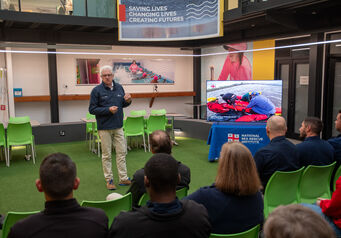
Western Cape Premier Alan Winde today visited the National Sea Rescue Institute (NSRI) Volunteer Support Centre (VSC) in Cape Town to thank volunteer crews and staff from across the province who were activated during the recent floods. ...
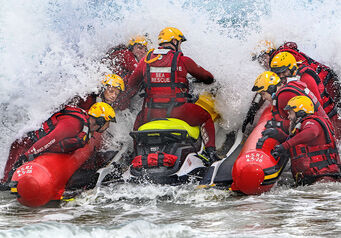
Send us your favourite photograph of NSRI people doing what we do, and you could win an NSRI shop voucher worth R250! ...

The NSRI has secured a significant three-year partnership with the Victor Daitz Foundation and World Relief Australia to fund a dedicated Drowning Prevention Instructor in Richards Bay, KwaZulu-Natal. ...