


Station 5 Durban has distinguished itself over the past five years with its exceptional record of conducting over a hundred successful medical evacuations.
This achievement has been made possible through its volunteers' dedication, the station's strategic location, and the ORC’s (Offshore Rescue Craft) remarkable capabilities.
Operations Director Brett Ayres provided insight into the dynamics behind these numbers: "Durban pre-Covid did not traditionally conduct a high number of medevacs. However, during Covid, maritime medical extrications took off, with many Mariners being forced to stay on board longer as well as the change in transport routing. We expected that post-Covid, these numbers would reduce, but once the process and the ‘routine’ of ships, agencies, and the MRCC recognised Durban as a good Medevac location, this trend continued."
The ORC has been critical in enabling Station 5's swift and effective responses. Ayres explained, "The ORC is a more suitable platform for conducting medevacs. Firstly, its size and deck space make for easier working and manoeuvring of rescuers and casualties when lowering them off the ship. Its visibility when handling the vessel with a flybridge allows the helmsperson to easily see the status of the casualty and the exact proximity of the rescue vessel to the ship. Thirdly, its weight, hull design, and superior seakeeping make the general process much safer. Lastly, paramedics have a lot more space inside the cabin shelter or below decks to attend and care for casualties than our older vessels did."

Station Commander Roy Weinand underscored the increase in medevac frequency due to recent geopolitical factors. "One of the main factors is that ships passing through the Red Sea have been diverting to Durban," he noted. "This shift, spurred by the ongoing conflict in the Middle East, has resulted in a significant rise in medevacs. Plus, the Port of Durban simply can't handle the volume of ships. It is much easier and quicker for the ship's agents to request Durban (Station 5) to send the ORC out to do a medevac because we can do it in a couple of hours."
The NSRI's commitment to safety and training ensures Station 5's continued preparedness. Ayres highlighted that these operations "carry the highest risk for crew and casualty," but effective training and debriefing processes help mitigate such risks. "We debrief, disseminate incident findings, and evolve our SOPs, adjusting training accordingly," he said. The NSRI prioritises the right of the coxswain to decline a rescue if conditions are unfavourable, ensuring that every mission is conducted with the utmost caution.
The consistent excellence demonstrated by Station 5 Durban reflects not only their technical skill but also their unwavering dedication. Their performance over these five years is a testament to their resilience and the pivotal role the ORC vessel has played in safeguarding lives at sea.
Festive gift packs: A heartfelt thank you to Survival Swimming Centre instructors
Read More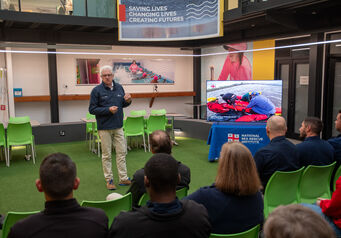
Western Cape Premier Alan Winde today visited the National Sea Rescue Institute (NSRI) Volunteer Support Centre (VSC) in Cape Town to thank volunteer crews and staff from across the province who were activated during the recent floods. ...
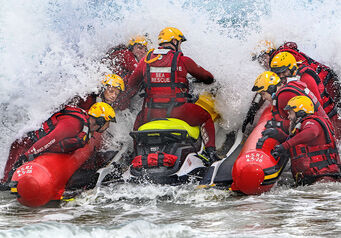
Send us your favourite photograph of NSRI people doing what we do, and you could win an NSRI shop voucher worth R250! ...
The NSRI has secured a significant three-year partnership with the Victor Daitz Foundation and World Relief Australia to fund a dedicated Drowning Prevention Instructor in Richards Bay, KwaZulu-Natal. ...