

As colder weather creeps in, NSRI stations across the country are shifting their focus to the unique challenges winter brings.
From storm surge barriers in the Western Cape to changing beach conditions along the Garden Route, crews are adapting their training, equipment and operations to stay rescue-ready through some of the toughest months of the year.
At several stations, winter preparation is more important than ever, as increasingly frequent storms and heavy swells put both rescue crews and rescue bases under pressure.
For Station 2, Bakoven, winter preparation begins long before the storms arrive.
Station Commander Bevan Geyser says crews closely monitor weather forecasts for signs of dangerous swell and storm conditions. “We move all our storm barrier gear out from storage to a more accessible location at the station to be ready to assemble at a moment's notice.”
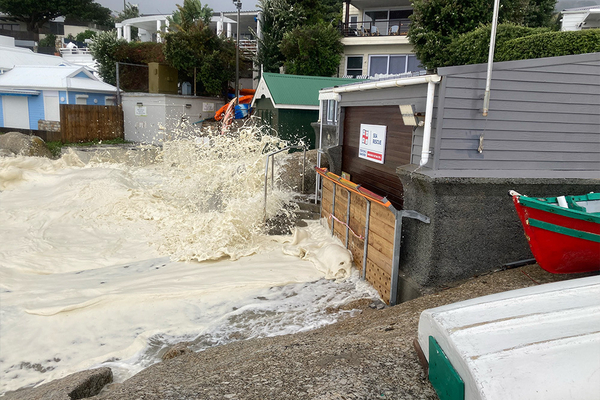
The station’s storm barrier was developed after years of repeated winter damage.
“When a storm was predicted, the boat was relocated to one of the marinas, and all the equipment in the boat shed would be stripped out and relocated,” Former Station Commander Luke van Riet recalls. “After the storm, we would always have extensive winch replacements, winch repairs, and electronic repairs.”
According to Luke, the idea for the barrier came late one night while trying to find a better solution.
The barrier uses galvanised steel I-beams and removable timber inserts designed to absorb and deflect the force of incoming waves. Inspired partly by Dutch flood defences, the structure has now been in use for four years.
“So far, it's working flawlessly,” Luke says. “We haven't had to do any major storm damage, electrical, or winch repairs. And that's a massive gain.”
For the crew, the impact has been significant.
“We no longer need to evacuate the boat and kit,” Bevan adds. “Our station can now withstand the worst of winter storms, disassemble the barrier quickly, and be back online within minutes of the swell subsiding.”
Further east, Station 12 in Knysna has also installed storm gates after experiencing more frequent storm surges in recent years.
Deputy Station Commander Grant van Staden says winter storms increasingly threaten the station’s vessels and equipment.
“We recently installed storm gates as we have experienced more frequent storm surges, which result in the waves breaking into the base and the water flowing over our winches,” he says.
Before the gates were installed, crews often had to move rescue vessels to safer moorings ahead of major storms, taking volunteers away from work and family commitments.
Winter also changes the way the station trains. With darkness falling earlier and rough conditions at the Knysna Heads, crews focus more heavily on medical training, navigation and shorter training scenarios.
Despite the challenges, the station maintains strict maintenance schedules year-round to ensure equipment remains ready for rapid deployment at any time.
At Station 14, Plettenberg Bay, winter preparation centres around changing sea conditions, flooding risks and dramatic sand washaways along Central Beach.
Station Commander Jaco Kruger says winter storms create a completely different operating environment compared to summer.
“In winter, we predominantly get these big cold fronts coming past,” he says. “Big seas and big south-westerly swells are a problem.”
Large swells can dramatically reshape the beach and sandbanks used for launching rescue craft.
“Big swell breaks break the sandbar up,” Jaco explains. “Southeasterlies in summer normally deposit sand, whereas just westerlies will suddenly swell, break the sandbar and take the sand away.”
Training also shifts during the colder months. Crews spend more time on night exercises, medical refreshers and swift-water rescue preparation for potential flooding incidents.
“Winter does bring certain unique challenges,” says Jaco. “People get colder, easier and faster on the boats, so you've got to have your foul-weather jackets and pants. Often, we'll even use double wetsuits for excursions and training exercises.”
The station also prepares crews for increased shark activity and winter whale disentanglement incidents.
Although each station faces different risks, a common theme runs through all their winter preparations: adaptability.
Whether it is building storm barriers strong enough to hold back the sea, adjusting training for dangerous conditions or preparing for rapidly changing coastlines, NSRI crews continue to innovate and adapt to protect the public and each other.
The NSRI’s New Winter Range Built for South African Winters
Read More
Western Cape Premier Alan Winde today visited the National Sea Rescue Institute (NSRI) Volunteer Support Centre (VSC) in Cape Town to thank volunteer crews and staff from across the province who were activated during the recent floods. ...
Send us your favourite photograph of NSRI people doing what we do, and you could win an NSRI shop voucher worth R250! ...

The NSRI has secured a significant three-year partnership with the Victor Daitz Foundation and World Relief Australia to fund a dedicated Drowning Prevention Instructor in Richards Bay, KwaZulu-Natal. ...