

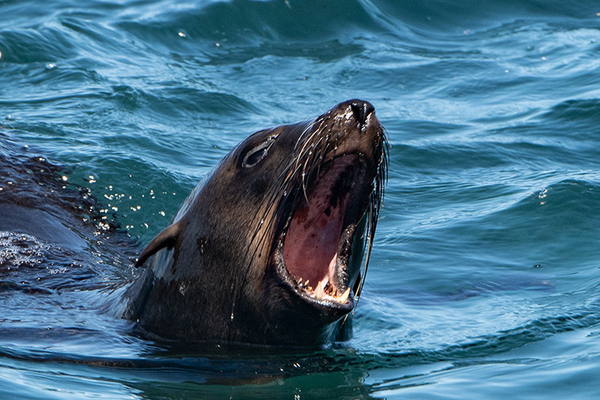
Cape Town’s coastline has long been home to thousands of Cape fur seals, and encounters with them are typically peaceful and non-aggressive. Recently, authorities have noted unusual behavioural changes in some colonies, indicating rabies infections.
Gregg Oelofse from the City of Cape Town’s Coastal Management department says that there are over 90 confirmed rabies cases in seals in Cape Town’s waters alone since testing started two years ago. He adds, however, that “numbers are likely much higher”.
“We know with certainty that the disease is now endemic in the Cape Fur Seal population. What we experience on the ground is what the vets call a ‘slow burn with flares’ – in other words, the presence of the disease is low but constant, and we see periodic flare-ups in seal colonies. Most recently, we have seen a flare in the Hout Bay area.”
How authorities are responding
Following a recent incident involving a seal and kayakers in Hout Bay, the CoCT’s focus has been on a fast, humane response to protect both people and wildlife once a seal suspected of rabies is reported. “After the Hout Bay incident, we were able to locate and humanely euthanise the seal,” Gregg says. Ongoing colony surveillance then led to the humane euthanasia of a second rabid seal at Duiker Island.
Gregg adds that the aim is “to remove symptomatic seals as quickly and humanely as possible to limit the public risk, reduce transmission to other seals, and end the suffering of the animal.”
This work is guided by a Cape fur seal rabies management plan developed through an intergovernmental group and expert workshops. It includes routine boat-based surveillance at key colonies, a clear behavioural “case definition” to identify suspect animals, and strict protocols for when and how euthanasia and testing should occur.
High-risk occupational groups, such as vets, wildlife workers, and first responders to rabid seals, are vaccinated in advance, and beach safety teams are instructed to close the water and raise warnings if a seal bites someone or behaves in an unusually aggressive manner.
The NSRI has also adapted its operations to address this evolving risk while continuing to support the safe enjoyment of the ocean. Darren Zimmerman, Station Commander at NSRI Station 10, Simon’s Town and Managing Director of Cape Medical Response, explains that “one of the key initiatives has been the introduction of dedicated seal bite treatment kits on rescue vessels and at rescue stations.” Each kit contains specialised flushing solutions, wound care supplies and a clear treatment protocol guide for volunteers to provide immediate first aid.
The NSRI has also stepped up crew awareness, advising volunteers to avoid in-water training in high seal-density areas, to conduct careful visual assessments before entering the water, and to maintain “a continuous watch for unusual seal activity while operating in the water.”
Any suspicious behaviour is immediately reported to the CoCT’s Marine Unit for further investigation and appropriate intervention.
What this means for the public
For everyday ocean users, the message is one of informed respect: enjoy our remarkable marine wildlife, give seals space, and if something does not look right, get out, report it and get checked. Awareness and early action are key to keeping both people and seals as safe as possible.
Seals are naturally boisterous, especially in colonies, so not all apparent “aggression” is a cause for alarm. However, certain behaviours are considered red flags for possible rabies infection.
These include:
Highly aggressive, unprovoked behaviour in the water or on the beach
Attacking or biting foreign objects such as rocks, plastics, buoys, kelp or boats
Repeated attempts to get onto the craft
Charging towards people or dogs
Other concerning signs include disorientation, snapping at “imaginary” objects, uncontrolled twitching, head bobbing, “balloon that won’t sink” style swimming, foaming at the mouth, or a lack of normal fear of humans.
Gregg emphasises that “the single most important sign is unusual aggression and biting of foreign objects.”
If you see a seal that appears unusually aggressive or unwell, the safest action is to keep your distance and call it in. Do not attempt to approach, touch or assist the animal.
Darren’s advice to kayakers, surfers and swimmers is to:
Remain calm and avoid escalating the situation
Exit the water calmly and quickly
Keep boards or boats between yourself and the animal
Warn others, and report the incident
On beaches, dogs must be kept away from seals, whether they appear healthy or sick.
If any bite, scratch, or contact with seal saliva occurs, even if minor, the wound should be washed thoroughly with soap and running water for at least 15 minutes. “The person should immediately seek medical attention due to the high risk of infection and the need for possible rabies post-exposure treatment,” Darren adds.
Contact the NSRI emergency number on 087 094 9774, or the CoCT’s emergency call centre on 021 480 7700, who will alert Coastal Management and the marine response teams.
File photograph by Dr Cleeve Robertson.
NSRI and SCOUTS SA Western Cape Join Forces to Develop Young Water Safety Leaders
Read More
Western Cape Premier Alan Winde today visited the National Sea Rescue Institute (NSRI) Volunteer Support Centre (VSC) in Cape Town to thank volunteer crews and staff from across the province who were activated during the recent floods. ...
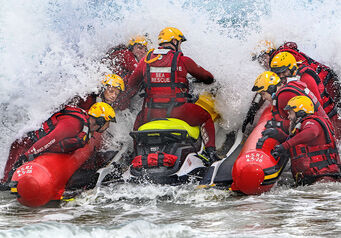
Send us your favourite photograph of NSRI people doing what we do, and you could win an NSRI shop voucher worth R250! ...
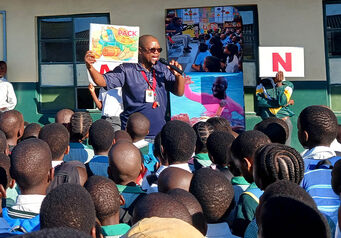
The NSRI has secured a significant three-year partnership with the Victor Daitz Foundation and World Relief Australia to fund a dedicated Drowning Prevention Instructor in Richards Bay, KwaZulu-Natal. ...